Rimini re-values its waterfront through the eyes of young citizens
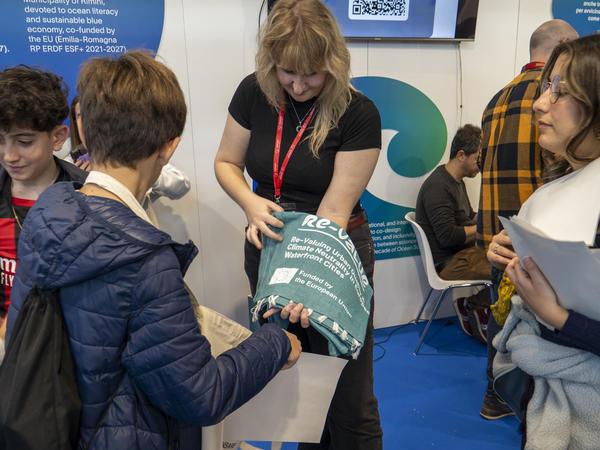
At ECOMONDO 2025, a leading international fair on ecological transition and circular economy, more than 400 students visited the Rimini Blue Lab stand and took part in a research and experimentation initiative coordinated by the University of Bologna within the framework of the Re-Value project. The activity was part of an educational pathway developed in collaboration with schools and aimed at collecting young people’s perceptions, opinions, and experiences related to Rimini’s urban and coastal spaces, with a specific focus on Parco del Mare and the city’s waterfront. Through hands-on activities and innovative research tools, students were encouraged to actively reflect on the relationship between the city, the environment, and the sea. Their contributions offered valuable insights into how younger generations experience public spaces and interpret recent urban transformations. These perspectives are now feeding into ongoing reflections on the future development of Rimini’s waterfront, enriching the research process with fresh, informed, and forward-looking viewpoints.
Classes arriving at the stand were divided into two groups. The first group took part in an experiment using an eye-tracking headset, a technology that allows researchers to analyse visual attention and gaze patterns when participants are exposed to specific images of the waterfront pilot area. The second group served as a control sample and completed an interactive digital questionnaire. Despite the different methodologies, both groups were asked to respond to questions structured around three main thematic areas, allowing the research team to compare emotional and instinctive reactions with more reflective and reasoned responses. The first section of the questionnaire involved viewing the same set of images that were shown to students using the eye-tracking device. For each image, participants were asked to identify three positive elements and three negative elements, encouraging critical observation and reflection on the qualities and shortcomings of the spaces depicted. This parallel approach made it possible to analyze potential similarities and differences between what visually attracts attention and what is consciously recognized and articulated by the students. The second section focused on soft mobility, asking students to express their level of agreement with a series of statements related to their everyday experience of moving around the city, such as walking, cycling, and using sustainable transport options. The third section addressed urban regeneration, gathering opinions on statements designed to explore perceptions, expectations, and values connected to the transformation of urban spaces and the future of the waterfront. In addition to completing the interactive questionnaire, the control group also took part in a short discussion with the research team. Based on the answers provided, this debate created an opportunity for open dialogue, allowing students to further explain their viewpoints, exchange ideas, and engage directly with researchers. This moment of interaction helped deepen the understanding of the responses collected and reinforced the participatory nature of the initiative.
The students’ voices brought renewed momentum to the Re-Value Your Waterfront Campaign, which advocates for greener public spaces and stronger community involvement in waterfront planning and management. Each participant received the Rimini edition of the Re-Value SeaTowel, made from recycled fabric and featuring the Re-Value logo. This small but meaningful item symbolized the collective engagement of young people and their active role in shaping the future of Rimini’s coastal environment.
About the partners
Rimini Blue Lab - Municipality of Rimini
Rimini Blue Lab is a social and cultural innovation laboratory of the Municipality of Rimini, devoted to Ocean Literacy and sustainable blue economy, co-funded by the EU (Emilia-Romagna RP ESF+ 2021-2027).
University of Bologna - Department of Civil, Chemical, Environmental and Materials Engineering (DICAM)
DICAM at the University of Bologna focuses on research and innovation in environmental sustainability, resource management, climate change resilience, and green–blue infrastructures.
University of Bologna - Department of Architecture (DA)
The Department of Architecture at the University of Bologna promotes integrated approaches to urban and landscape design, with a specific focus on climate adaptation, urban regeneration, and nature-based solutions.


Publishing date:
Authors: Municipality of Rimini
Related Cities
Partners


The sole responsibility for the content of this website lies with the project and in no way reflects the views of the European Union.